Quick Answer: What is chemical logistics?
When professionals ask what is chemical logistics, they are referring to the highly specialized management, storage, and transportation of hazardous chemical products. Unlike standard freight, it requires highly engineered equipment (such as ISO tanks), strict adherence to multi-jurisdictional regulatory frameworks (DOT, EPA, IMDG), and certified personnel to mitigate environmental, financial, and safety risks.
For manufacturing executives and supply chain directors, treating the movement of hazardous materials as standard freight is a critical operational vulnerability. Understanding the chemical logistics definition and scope is the first step in protecting your supply chain from catastrophic liability and margin erosion.
At its core, chemical supply chain operations are not merely about transportation; they represent an applied science of risk management, combining chemistry, regulatory law, and advanced logistics engineering.
Core Processes in Chemical Logistics Operations
To truly grasp hazardous materials logistics in practice, one must look at the specific, highly controlled processes that differentiate it from moving dry consumer goods. The entire ecosystem is built around product integrity and public safety.
1. Specialized Containment and Equipment Selection
Chemicals are volatile. They can be corrosive, flammable, temperature-sensitive, or highly reactive. A primary process in this sector is matching the specific chemical profile—detailed in the Safety Data Sheet (SDS)—to the correct transport equipment. This involves selecting between stainless steel, FRP (Fiberglass Reinforced Plastic), or rubber-lined tank trailers. It also requires managing in-transit temperature controls to prevent product degradation or dangerous pressurization.
2. Segregation and Facility Management
Warehousing and staging chemical products require rigorous segregation protocols. Incompatible chemicals (such as strong acids and bases) must be physically separated by specific distances or firewalls to prevent reactive disasters. Specialized terminals are engineered with secondary containment systems (berms and dikes) to capture any potential spills before they impact the environment.
3. Multimodal Hazardous Transport
Chemical supply chains are inherently global. A key process is the seamless transfer of hazardous materials between modes of transport—such as moving an ISO tank from a rail chassis to an ocean vessel. This requires specialized lifting equipment, rigorous chain-of-custody documentation, and deep expertise in port terminal operations.
Chemical Logistics Compliance Requirements
The regulatory burden in this industry is uncompromising. Operating a chemical supply chain requires mastery over a complex web of local, federal, and international laws.
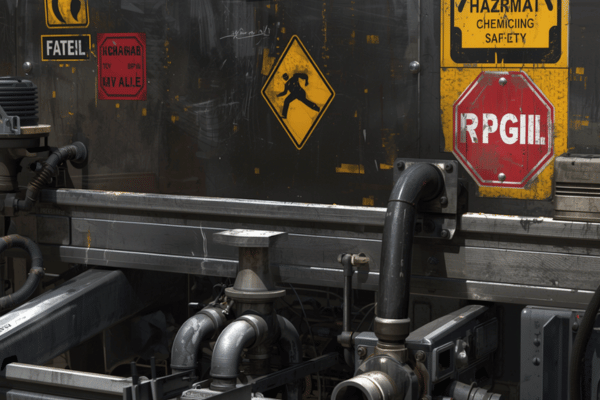
- Department of Transportation (DOT) & FMCSA: In the United States, the movement of hazardous materials is governed by stringent DOT regulations. This dictates everything from the specific design of the tank trailer to the exact placement of HAZMAT placards and the specific endorsements required on a driver’s Commercial Driver’s License (CDL).
- Environmental Protection Agency (EPA): Logistics providers must comply with EPA regulations regarding emissions, spill response protocols, and the handling of hazardous waste generated during tank washouts.
- International Maritime Dangerous Goods (IMDG): For cross-border and overseas shipments, compliance with the IMDG code is mandatory to ensure that chemicals are packaged, labeled, and stowed safely aboard vessels.
Why Chemical Logistics Matters for Industrial Operations
Failing to understand chemical logistics exposes companies to immediate financial and regulatory risk. Unmanaged operations lead to rejected loads at delivery facilities, detention charges at the port, and in the worst cases, environmental litigation. This highlights why proactive chemical logistics risk management is non-negotiable, particularly when navigating complex cross-border risks.
Leveraging Houston chemical logistics hubs provides shippers with a distinct advantage. By partnering with specialized providers like Invia Global, companies plug directly into a mature ecosystem of certified carriers, compliant tank wash facilities, and expert customs brokers. Invia Global ensures that every regulatory requirement is met and every shipment is executed with full compliance and operational control.
What is the difference between standard freight and chemical logistics?
Standard freight focuses on speed and cost-efficiency for inert goods. Chemical logistics focuses on safety, regulatory compliance, and equipment compatibility to handle hazardous materials without incident.
What certifications are required for chemical logistics?
Providers and carriers must hold specific authorities, including DOT HAZMAT registration, appropriate insurance policies covering environmental liability, and drivers must possess valid CDL HAZMAT endorsements.
Why is the Safety Data Sheet (SDS) important in logistics?
The SDS is the foundational document for any chemical shipment. It dictates the required emergency response protocols, the necessary transport equipment, and the specific hazards associated with the compound.